
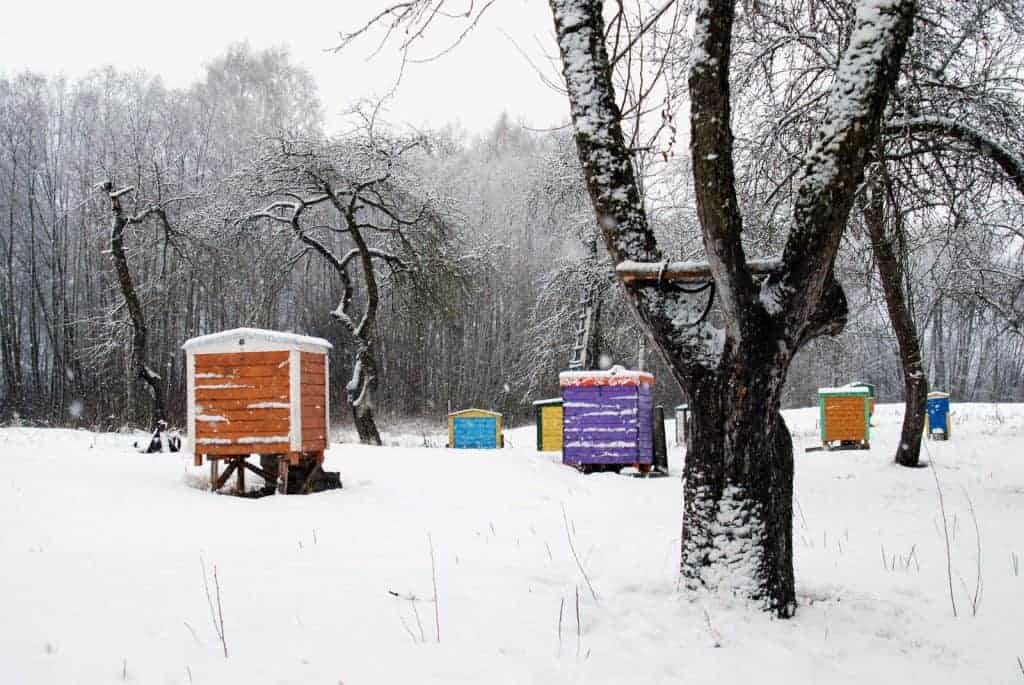
This guide is written with colder-climate beekeepers in mind, where late winter and early spring conditions can still threaten colony survival. Even with careful fall preparation, resource availability in early spring depends heavily on your apiary’s immediate surroundings—and those true resources aren’t fully understood until you’ve kept bees in one place for several seasons.
Bees cannot fly far in cold temperatures, so it’s essential to know what natural forage exists within about a ½-mile (0.8 km) radius of your apiary. Early pollen and nectar often come from skunk cabbage, willows, maples, alders, field pennycress, purple dead-nettle, shepherd’s purse, crocuses, grape hyacinth, and Siberian squill.
Even if these early resources are nearby, a week of cold, wet weather can quickly create starvation risk, especially in fast-growing spring colonies. Understanding your bees’ nutritional needs—carbohydrates for energy and protein (pollen) for brood rearing—is key to knowing when and how to feed.
The Spectrum of Support
Feeding falls on a spectrum, from emergency intervention to proactive supplementation. Both play vital roles in responsible beekeeping.
Bees are remarkably capable of managing their own food needs when environmental conditions align with their natural rhythms. But when those conditions don’t—due to depleted stores, late-winter cold snaps, slow spring buildup, or delayed nectar flows—it becomes the beekeeper’s responsibility to step in.
Over the years, many beekeepers felt guilty about feeding bees, seeing it as interference. But feeding isn’t failure—it’s stewardship. We are the ones who placed colonies in environments that may not fully support them. Supplemental feeding helps colonies bridge resource gaps we inadvertently created.
Overall, feeding serves two purposes:
- To fill temporary voids in natural resources.
- To stimulate and support colony buildup when preparing for pollination or early spring expansion.
Emergency feeding ensures survival; supplemental feeding ensures momentum.
Emergency feeding – crisis intervention:
Emergency feeding addresses immediate survival needs whenever colonies face starvation—most often in late winter or very early spring, but it can occur any time resources run out.
Once emergency feeding is necessary, continue feeding until natural forage becomes reliable. Starvation risk grows with colony buildup, not the other way around. A large, rapidly expanding spring colony can starve faster than a smaller one when weather turns cold and forage halts.
When emergency feeding is necessary:
Heft tests in late winter that reveal rapid weight loss or noticeably light hives signal potential trouble.
If a colony that felt moderately heavy in January feels alarmingly light in February—and spring forage is still weeks away—emergency feeding may be necessary.
Comparing colonies can help identify outliers, but remember: each colony manages honey differently. Some conserve efficiently, while others raise brood earlier or maintain larger clusters, leading to faster consumption. Use comparisons as helpful clues, not strict indicators.
For new beekeepers, hefting can be unreliable without experience or multiple colonies for comparison. A practical alternative is visual confirmation:
- If you see the cluster on the top bars under the inner cover, and you know honey stores are low in that upper box, it’s time to feed.
- Once the cluster moves up, it rarely moves back down to lower honey frames—so provide accessible feed directly above them.
The risk calculation:
Emergency feeding in late winter often means opening hives in less-than-ideal temperatures. You’re disrupting the cluster, exposing bees to cold, and potentially causing harm while trying to help. If bees are in a tight cluster, ensure feed is placed directly above them; they won’t break cluster to reach distant food in cold conditions.
You can safely open hives for emergency feeding when conditions are cool but not bitterly cold—ideally in the mid-40s°F (7°C) or warmer, with little to no wind. Have your feed ready, open the hive only long enough to place it directly above the cluster, then close it up immediately. The key is speed and minimal disturbance. Waiting for 50°F+ (7°C+) weather risks missing your window, as bees may already be flying by then.
Sometimes the risk is justified because starvation is certain without intervention. Other times, colonies are better left alone. This is a hard judgment call that gets easier with experience.
Emergency feeding methods:
- Fondant is the most effective emergency feed. It contains moisture, making it easy for bees to consume even in cold, dry conditions.
- Candy boards work well but are slightly harder for clustered bees to consume.
- Dry sugar (e.g., mountain camp method) is the least ideal but still better than nothing. It requires ambient moisture to dissolve, so it works especially well in condensing hive setups, where humidity is naturally available.
- In very dry environments, a bit of moisture helps bees process it.
A small wooden shim or spacer above the top bars may be needed to fit sugar or fondant inside. If you didn’t add this in fall, it can be added with the feed during emergency intervention.
Emergency feeding isn’t about perfect nutrition—it’s about providing quick, accessible carbohydrates to keep the cluster alive until natural forage returns.
Spring supplemental feeding – building momentum:
Spring supplemental feeding is different from emergency feeding. You’re not rescuing a starving colony—you’re helping a surviving one gain strength and grow as it transitions into the active season.
In some cases, emergency feeding naturally transitions into supplemental feeding if conditions stay poor or the colony still requires support.
When spring feeding helps:
Even colonies with adequate stores to survive winter might benefit from supplemental feeding in early spring. Natural nectar flows often don’t begin immediately when temperatures allow brood rearing. Early spring can present a gap—bees are flying, the queen is laying, brood needs feeding, but substantial natural forage isn’t available yet.
Spring supplemental feeding supports this buildup period. It can help weak colonies recover faster and strong colonies build population more aggressively. That said, bees do best on natural forage. Spring feeding is supplemental support, not replacement for natural resources.
Spring feeding methods:
Light sugar syrup (1:1 ratio by volume) is commonly used for spring feeding, mimicking nectar and stimulating brood rearing.
However, light syrup increases moisture inside the hive, which can be risky during cold nights when condensation occurs.
- If nights are cold, use fondant instead until days are warm enough for bees to consume syrup quickly.
- Avoid leaving syrup feeders inside hives overnight in near-freezing weather—it can chill the cluster or cause syrup spills.
Inverted mason jars above the inner cover work well for small, daily quantities that bees can finish by evening.
Watch moisture carefully in early spring—humidity rises naturally due to brood rearing, regardless of hive style.
Protein supplementation:
Protein feeding supports brood rearing when natural pollen sources are inconsistent. In cold regions, early pollen patty use is often essential.
Place patties directly over brood areas, feeding small portions (⅓–½ patty at a time) to provide a buffer without discouraging natural foraging.
While natural pollen is always superior, pollen substitutes are invaluable during extended cold or wet spells when bees can’t forage.
Overfeeding protein when pollen is abundant can reduce foraging motivation—so feed only as long as natural sources are unreliable.
Timing and quantity:
Begin spring feeding when:
- Temperatures consistently allow flight.
- You see evidence of brood rearing, but natural nectar and pollen are still limited.
Feed smaller amounts regularly rather than large infrequent doses—consistent, moderate feeding stimulates natural behavior rather than replacing it.
Monitor consumption: if syrup remains untouched and no natural nectar is available, investigate colony health. Lack of feeding response alongside poor growth may indicate nosema or other disease.
When to stop feeding:
Knowing when to stop feeding is as important as knowing when to start. The goal is to support colonies when they need help, then step back when natural resources are adequate.
Watch for natural nectar flow:
Bees returning with pollen loads is the first signal that spring is genuinely arriving. When you see pollen coming in consistently, natural nectar sources are likely available or imminent. As natural nectar flow begins, bees will show less interest in syrup feeders.
If you see bees actively foraging, bringing in resources, and storing fresh nectar in frames, it’s time to stop supplemental feeding. Continued syrup feeding when natural forage is abundant can lead to bees storing sugar syrup instead of true honey, contaminating harvestable stores and creating dependency where bees should be self-sustaining. Overfeeding can also cause the hive to become honey bound, leaving the queen with limited space to lay eggs and potentially triggering swarm behavior.
Regional timing varies significantly. Some regions have strong early spring flows from willow, maple, or fruit tree blossoms. Others face extended spring dearth before major flows begin. Watch your local conditions and your bees’ behavior more than the calendar. Always stop syrup feeding at least two weeks before adding honey supers intended for harvest.
The takeaway:
Emergency feeding and spring feeding represent different points on the spectrum of beekeeper intervention. Emergency feeding is crisis management—saving colonies on the brink. Spring feeding is proactive support—helping colonies build strength when natural resources are limited.
Both have their place. Neither should become routine substitution for adequate fall preparation and appropriate hive management. Bees evolved to manage their food stores remarkably well when they have access to adequate forage. Sometimes they need help bridging gaps created by weather, timing, or circumstances beyond their control.
Learn to recognize when intervention truly helps and when it’s better to step back. Your colonies communicate through their behavior, stores, and overall development. Feeding isn’t a sign of failure—it’s part of responsive, mindful beekeeping. The goal is simply to help them bridge brief periods of scarcity, then allow nature to take over again.


