I have a bike route that leads me past a yard with 30-40 beehives. I rode by it for more than a year, always thinking, “I should stop and ask if I can bring my own jars for honey.” Finally, one day in the spring of 2024, I was riding past the apiary, and someone was leaving in his truck. I stopped and met David, the owner. He is a local, being born and raised on that very road. And he had a wealth of information on the area, bees, and types of honey.
That day, I took home two jars of honey, one Sourwood (which is NOT sour at all) and one dark Appalachian wildflower. Right away, I did my own taste tests between four different honeys and was amazed! The dark one had notes of a nice porter beer, while the light-colored Sourwood was very sweet, ending on a peach note. The inexpensive honeys I had on hand tasted more like sugar syrup. I was totally hooked! It was like wine tasting, only much sweeter!
And learning from David that different honey could be gathered from one hive depending on the blooms in season got me very excited.
I called a couple of cycling buddies from my Bolivian days who had returned to their home in Canada. They had started beekeeping the year before, and from their Instagram posts looked like they were having success. They answered a lot of questions I had about beekeeping from a beginner’s standpoint, such as, how much time does beekeeping take? I also spoke to a beekeeper from the local bee association, who explained other aspects, such as why it’s essential to use new equipment and avoid buying cheap, used equipment from another beeyard. And he spent an hour answering questions.
Perhaps I should have just asked David if I could be a helping hand in his apiary first before jumping into the deep end of the pool, but I am one for adventure and enjoy the learning process, the ups and downs. In the end, I did some calculations and took the plunge of shopping for bees. I had read that if you can get local bees you would probably have better chances for success.
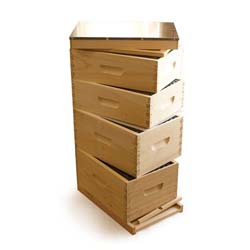
I hoped to build my own equipment with the help of my handy (and handsome) husband, which would keep costs down. My idea was, “spend money the first year, sell honey and make it back the next year.”
By now, if you’re a seasoned apiarist, you may be chuckling to yourself, realizing I was in for a surprise when I would start spending a lot of money on necessary beekeeping items. Newbees may be asking, “Like what?” Like buying all sorts of equipment for each season or supplies to make equipment. Beekeeper gear. Managing Varroa mites and other pests. Feeding the bees (yes, that’s a thing). Equipment for honey harvest and honey. And then there was the big question, “What if my bees decided not to make honey the next year and I have no income?”
These are all valid points a new beekeeper SHOULD ask themself. However, beekeeping has been done for thousands of years with only items on hand. So happily, it can be approached with a minimalist attitude for those who are willing to learn and work at it.
What about you? What brought you to beekeeping?