One of the most magical moments for a new beekeeper is tasting that fresh raw honey after watching weeks and months of hard work build up in a hive. It’s such a miracle! These tiny creatures work in unison to visit thousands of flowers and bring back drops of nectar. Eventually, that nectar’s moisture content is reduced to give it a nice sticky consistency we honey-lovers recognize and enjoy.
I am going to admit I was one of those people who complained about the high price of honey. And I didn’t understand why local raw honey was so expensive – until my first year of beekeeping. As with all subject matters, when we learn the ins and outs of a topic, we come to an understanding and appreciation for the things we didn’t yet know. It’s one of the beauties of growing, maturing, and taking the time to discover new things, right?
So, my first amazing summer of beekeeping taught me much about the tireless winged workers in my hive and how they collect, make, use, and store honey. Like how interesting is it that each bee produces wax from little glands on their underside to first build the comb. And if you have wax foundations stamped with the hexagonal shape of the individual cells, the bees follow that mold and create about 7,000 cells per deep Langstroth frame (approximately 3500 per side). Just that fact alone is incredible!
But now, those cells are used to raise brood, and store pollen, nectar, honey, and used as bee sleeping spaces (yes, little beds). Instinctively, bees store the nectar and honey close to the brood. At the same time, like busy ants and squirrels, they are storing up food sources for winter. So whole teams of bees are busy collecting nectar. Some are adding enzymes. Others are fanning the nectar inside the hive to evaporate the excess moisture. Others are producing wax and capping the honey when it reaches the correct moisture content.
Did you know that in a healthy hive, capped honeycomb does not ferment or mold? That’s because the bees fan the nectar until it reaches approximately 18% moisture content before they cap it. That is the perfect composition to prevent fermentation. Bees also add enzymes from their hypopharyngeal glands that lower the pH and make honey inhospitable to bacteria, mold, and fungi. Now just where did millions of tiny bees get that wisdom from?
(Source: The Beekeepers Bible, p. 269)
Finally, when you, the beekeeper, see entire frames of capped honey, you know it’s time to harvest, if you so wish! Because we backyard beekeepers love our bees, we first make sure the bees have sufficient honey stores for themselves. Once we are sure of that, we can collect for ourselves.
The next step is learning how to remove frames and harvest honey. I helped my neighbor, David, with numerous hives and equipment, and got to see his setup for harvesting and collecting honey, which was super informative. However, this first season, I had chosen not to buy much equipment and wanted to collect honey “old-school” style. So, I watched videos on the crush and strain method of harvesting honey.
On July 5, (just two months after buying my first colony), I prepared my kitchen with cardboard on the counters and floor. I got a big plastic tub, a large honey knife (that came in my kit), a large stainless steel cooking pot, cheese cloth, colanders (for straining) and utensils for mashing. I also picked out some clean, dry jars with lids I had been saving for this occasion.
Then I went outside and smoked my beehive entrance. From the upper honey super I chose one medium frame that looked full of capped honey on both sides, and shook off the bees. I gave a couple puffs of smoke and lightly brushed bees off and set that frame in a box with a lid. Moving the box near my house, I opened it and swept off the last few stubborn bees, before bringing the frame into the house and set it in the plastic tub.

After carefully cutting the comb out of the frame, I crushed it, or began mashing it. Once it was all mashed together, I poured the mix into cheesecloth that was sitting in a colander on top of the stainless-steel pot. I would press the mash down and add to it, until finally all the crushed comb and honey was in the cheesecloth in the colander. As the dripping honey slowed down, I pulled up the sides of the cheesecloth and squeezed the sticky wax into a ball. I did that a few more times and even let the mass sit and drain overnight.


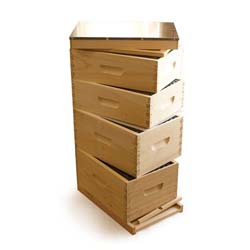
In the end, I collected 50 ounces of honey (in two jars). Amazing, right?? This was the most exciting thing I had done in a long time! There was something extremely satisfying about collecting honey similar to the way it had been done for thousands of years. In today’s society, so much is done with machines and without much thought. But this was part of a natural cycle that had taken weeks and a lot of deliberate attention. The bees had done so much work to make even one frame of honey. Yet, my honey super was nearly full (a total of 10 frames including the frame I had just harvested), as well as one deep box (that I would let the girls keep for themselves).

Suddenly this golden nectar was worth its weight in gold! I have to admit, I didn’t want even one drop of honey to go to waste while harvesting, so naturally I consumed all the excess droplets. At the end of that harvest season, I might have gained a couple of pounds, haha!? But now I appreciate why garden-to-table honey is costly. And I happily pay the price to my fellow honey harvesters!