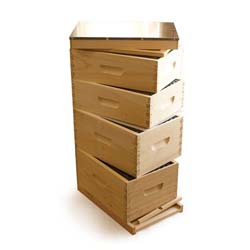
Winter presents beekeepers with a fundamental paradox: the desire to monitor colony health conflicts directly with the need to leave bees undisturbed. Opening hives during winter breaks propolis seals, disrupts cluster temperature (the cluster core may remain around 64–97°F (18–36°C), depending on brood presence), and forces bees to waste energy restoring it. Yet doing nothing while wondering whether colonies are surviving creates anxiety that can drive poor decisions.
The solution lies in external monitoring—techniques that provide useful information without opening boxes. These methods won’t answer every question or eliminate uncertainty entirely, but they offer enough insight to catch genuine emergencies while minimizing harmful intervention.
External Monitoring Techniques
The Heft Test
Many beekeepers rely on the heft test as their primary winter monitoring tool. Standing at the rear of the hive, lift gently from the bottom board—just enough to sense relative weight. Relative weight trends matter more than exact poundage in mid-winter. A hive with adequate stores feels surprisingly heavy; honey is dense at eight to ten pounds per fully capped deep frame. As winter progresses and bees consume stores, weight gradually decreases. Beekeepers with top-access equipment (Clauss hive domes, Vivaldi board, ventilated covers, top feeders) may prefer a quick top-peek instead, lifting only the outer cover to observe cluster position and nearby stores without fully opening the hive.
Screened Bottom Board Debris
Debris falling through screened bottom boards reveals surprising detail about colony activity. Honey uncapping wax indicates the cluster is accessing stored food and moving through the hive. The debris pattern shows cluster position—heavier accumulation appears directly below where bees are working. Debris quantity suggests colony size and activity level. This technique provides non-intrusive insight into cluster location, size, and progress through winter stores without any disturbance.
If you use solid bottom boards, you can still monitor debris by sliding in a removable insert or thin board. This allows you to track hive activity without needing a screened bottom.
Listening
Placing an ear against the hive wall reveals subtle sounds—quiet buzzing or rustling indicating bees moving inside the cluster. Some beekeepers use a stethoscope for clearer listening. A gentle hum suggests normal winter activity. Complete silence on extremely cold days isn’t necessarily alarming; some clusters remain very still when temperatures drop severely. Avoid knocking or tapping the hive to stimulate sound, as this risks disrupting the cluster unnecessarily. On very cold days, silence may simply mean the cluster is tightly compacted, not dead.
Entrance Observations
The hive entrance provides multiple indicators of colony status. Dead bees at the entrance often cause unnecessary alarm among new beekeepers, but a few dozen accumulated over weeks indicates a healthy sign—undertaker bees removing normal winter mortality means the colony is alive and housekeeping continues. Large numbers of dead bees may indicate stress, disease, or starvation, but small quantities are normal and expected. If dead bees block the entrance, bees can’t remove them until the next warm spell—don’t panic.
Cleansing flights occur on warmer days, typically when temperatures reach the mid-40s°F or higher. Bees take brief flights to void waste, often leaving yellow or brown spots on snow. Regular cleansing flights during appropriate weather confirm a living colony. Water foraging during winter may indicate brood rearing has begun, or it might simply mean bees are diluting crystallized honey stores—context matters.
Check entrance openings regularly, especially after heavy snow. Blocked entrances prevent cleansing flights and can cause suffocation. Clear snow carefully without excessive disruption. Conversely, no hive activity on multiple warm days—when other hives show obvious bee flights and activity—may indicate the colony has died. A single quiet day means little, but a pattern across several appropriate-temperature days suggests a possible dead-out.
Visual Walk-Arounds
Regular walks around the apiary reveal external conditions requiring attention. Check hive stability—wind or frost heave can tilt hives, potentially shifting internal frames. Verify covers remain properly seated and weighted. Look for tracks suggesting animal interference from skunks, bears, or mice. Assess equipment condition for cracks, damage, or compromised integrity that weather might have caused. These weekly or bi-weekly visual checks catch problems before they become emergencies.
Snow Melt Patterns
In regions with snow cover, watch how snow accumulates and melts on hive tops. Snow melting in a central area indicates heat rising from the cluster below, providing external evidence of internal heat generation. The warmest spot corresponds roughly to cluster location. However, insulation, cover material, snow depth, wind, and temperature all affect these patterns—consider this technique as providing hints rather than definitive information. Insulated covers often obscure melt cues. Absence of melting might indicate a dead colony producing no heat, or simply insufficient heat to melt through insulation and snow depth.
Monitoring Technology
Thermal imaging cameras and electronic monitoring gadgets exist for beekeepers who want technology-assisted winter monitoring. These devices can provide additional data about cluster location, size, and activity. While useful, they represent optional approaches rather than essential tools—the accessible techniques described above handle winter monitoring effectively for most beekeepers regardless of budget or technical inclination. Examples of technology monitoring tools are Bluetooth hive scales, temperature probes, or thermal cameras.
Interpreting What You See
Winter monitoring generates information that requires interpretation. Understanding which situations demand action and which represent normal winter conditions prevents both harmful over-intervention and dangerous neglect.
Emergency Situations Requiring Action
Certain observations indicate genuine emergencies. A critically light hive during heft testing suggests starvation risk and may justify emergency feeding. Blocked entrances during warm weather prevent cleansing flights and require careful clearing. Damaged equipment that compromises hive integrity needs repair when temperature allows. A hive that has been tipped or knocked over requires immediate attention regardless of temperature. No activity on multiple warm days when all other hives show obvious bee flights and activity may indicate a dead colony, though confirming this requires appropriate-temperature inspection. Brief lid lifts for emergency feed (fondant/candy) are less risky than full inspections even in upper-40s°F.
Normal Situations Not Requiring Intervention
Many observations that create anxiety represent normal winter conditions. Some dead bees at the entrance indicate normal mortality plus active undertaking behavior—signs of life rather than death. Quiet or absent sounds on extremely cold days reflect a tightly clustered colony rather than a dead one. No cleansing flights on marginal weather days may simply mean the temperature didn’t quite reach the threshold for bees to fly safely. General beekeeper anxiety about not knowing exactly what’s happening inside the hive is a universal winter experience, not a problem requiring intervention.
When Emergency Inspection Is Justified
While external monitoring handles most winter situations, rare circumstances justify opening hives. Understanding when inspection is appropriate—and when it absolutely isn’t—prevents both harmful over-intervention and dangerous neglect.
Temperature Reality
Bees fly when temperatures reach the mid-40s°F, but beekeepers shouldn’t open hives until temperatures reach at least 50°F minimum, with 55-60°F being ideal. Best conditions include two or more consecutive warm days (50°F+) with moderate nighttime temperatures, allowing bees to maintain a looser cluster and reducing the risk of chilling individual bees during inspection. Always choose midday timing when temperatures peak. Below these thresholds, opening hives risks chilling bees who cannot generate enough warmth to recover from exposure to cold air and surfaces.
True Emergencies
Critical starvation represents a genuine emergency—when the heft test and other observations indicate an extremely light hive in mid or late winter, a quick inspection on an appropriate-temperature day can confirm whether emergency feeding might save the colony. Equipment failure or significant damage may require inspection to assess internal conditions and make necessary repairs. Confirmed or strongly suspected pest invasion might justify inspection to verify the problem and determine whether intervention is possible.
What Situations Are Not Emergencies
Curiosity about whether bees are alive doesn’t constitute an emergency—external monitoring provides this information without disrupting the cluster. A nice day combined with missing bees emotionally represents understandable beekeeper feelings, not a reason to open hives. Precise food store assessment belongs to fall management, not winter intervention; heft tests provide adequate winter monitoring information. General anxiety about colony status is a normal part of winter beekeeping, not a justification for inspection.
Equipment-Specific Options
Hive equipment affects monitoring approaches. Top-access equipment like Vivaldi domes, top feeders, or ventilated covers allows less disruptive mid-winter checks than traditional Langstroth setups. Beekeepers can lift outer covers briefly to observe cluster position and nearby stores without fully opening hive bodies or pulling frames—a middle ground between external monitoring and full inspection.
Regional Variation
Climate significantly affects winter inspection opportunities. Northern beekeepers might not experience appropriate-temperature days between November and March, making mid-winter inspection impractical or impossible. In these regions, fall preparation becomes even more critical since winter intervention isn’t feasible. Southern beekeepers have frequent appropriate-temperature days but should resist the temptation to over-intervene simply because weather permits. Southern or coastal beekeepers often over-inspect simply because they can. Appropriate temperature doesn’t automatically justify inspection—genuine need must still exist.
Building Your Winter Monitoring Practice
Effective winter monitoring develops through practice and observation over multiple seasons.
Keep Simple Notes
Record basic information: date, temperature, observations made, actions taken (if any). These notes help identify patterns over time. Tracking heft test assessments throughout winter reveals consumption rates. Recording cleansing flight dates shows activity patterns. Noting when different monitoring techniques revealed useful information builds confidence in external methods.
Regular Visual Checks Build Confidence
Weekly or bi-weekly walk-arounds create familiarity with normal winter conditions. Beekeepers learn what their specific hives look like throughout winter—how much debris accumulates, which hives show earlier cleansing flights, how snow melts on different hive configurations. This accumulated experience makes abnormal conditions more obvious and helps distinguish genuine problems from normal variation.
Trust External Methods
External monitoring combined with thorough fall preparation provides sufficient information for winter management. Accepting uncertainty is part of winter beekeeping—no one knows precisely what’s happening inside winter hives, and that’s acceptable. Monitoring approaches vary by climate, equipment setup, and beekeeper experience. There’s no single “right way” to monitor winter hives; the combination of techniques that provides useful information while minimizing disturbance represents the appropriate approach for each beekeeper’s situation.
Winter monitoring is ultimately about gathering enough information to catch genuine emergencies while accepting that complete knowledge isn’t possible or necessary. External techniques provide that balance—offering useful insight without extracting the high cost that opening winter hives demands. Trust your fall preparation, trust your observations, and trust that your bees are remarkably capable of managing winter if given what they need.